WORLD TRADE CENTER
A major Lower Manhattan complex that evolved from a global business center into a site combining offices, transportation, retail, public space, culture and remembrance.
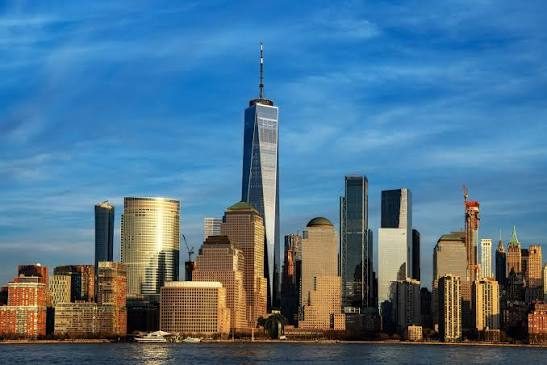
Drag to compare · The Twin Towers as a landmark of the Lower Manhattan skyline ↔ now
1939-1960s
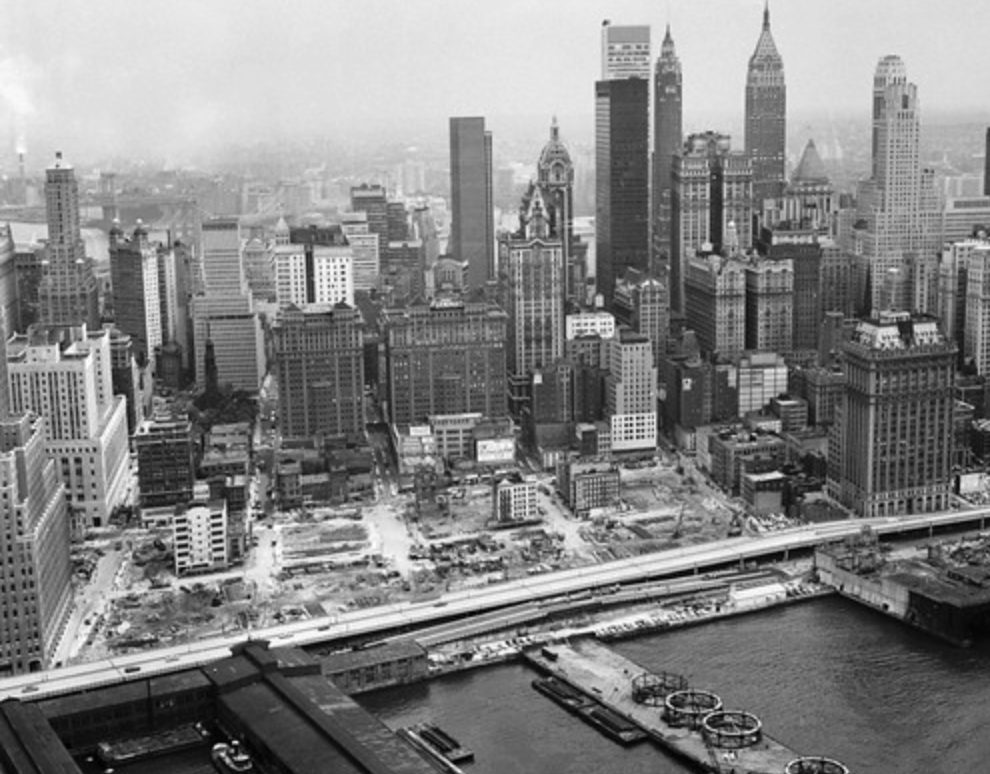
Before the World Trade Center, the site formed part of Lower Manhattan’s dense commercial district. It contained small businesses, warehouses, electronics stores, and narrow streets in an area commonly known as Radio Row.
The neighborhood was cleared during the 1960s to create a large international trade complex intended to strengthen Lower Manhattan’s economy.
The idea of a World Trade Center first appeared at the 1939 New York World’s Fair under the concept of promoting international cooperation through trade.
The proposal was revived in the late 1950s, and the Port Authority of New York and New Jersey took control of the project. The development was eventually moved to Lower Manhattan as part of a wider effort to revitalize the district.
1966-1975
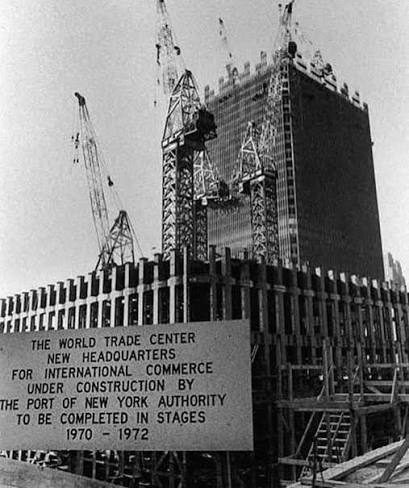
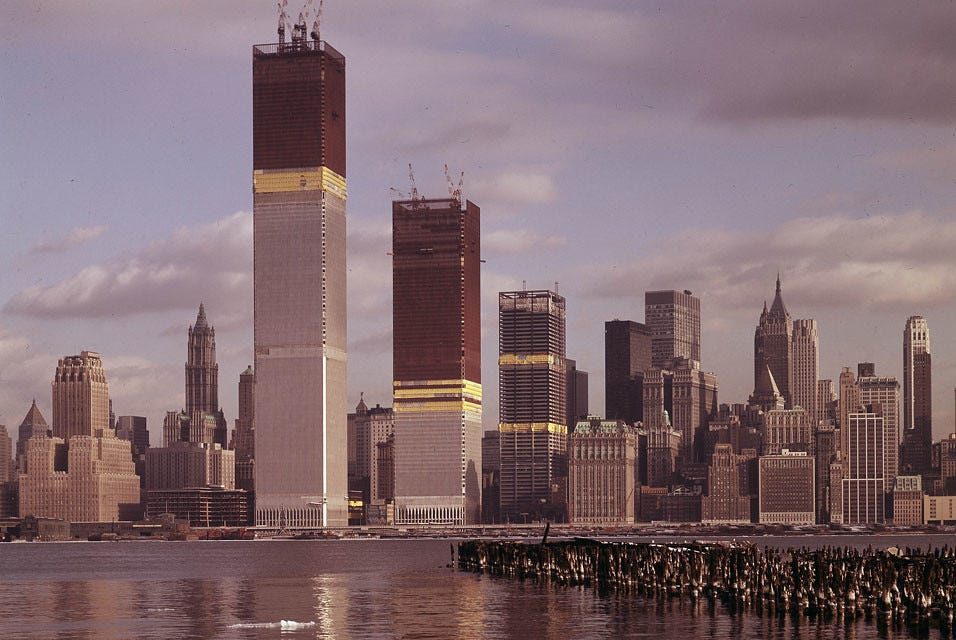
Construction began in 1966.
The project required the demolition of the existing neighborhood and the excavation of a large foundation beside the Hudson River. The completed 16-acre complex contained seven buildings, a large public plaza and the 110-story Twin Towers.
The World Trade Center was officially dedicated in April 1973.
1973-2001
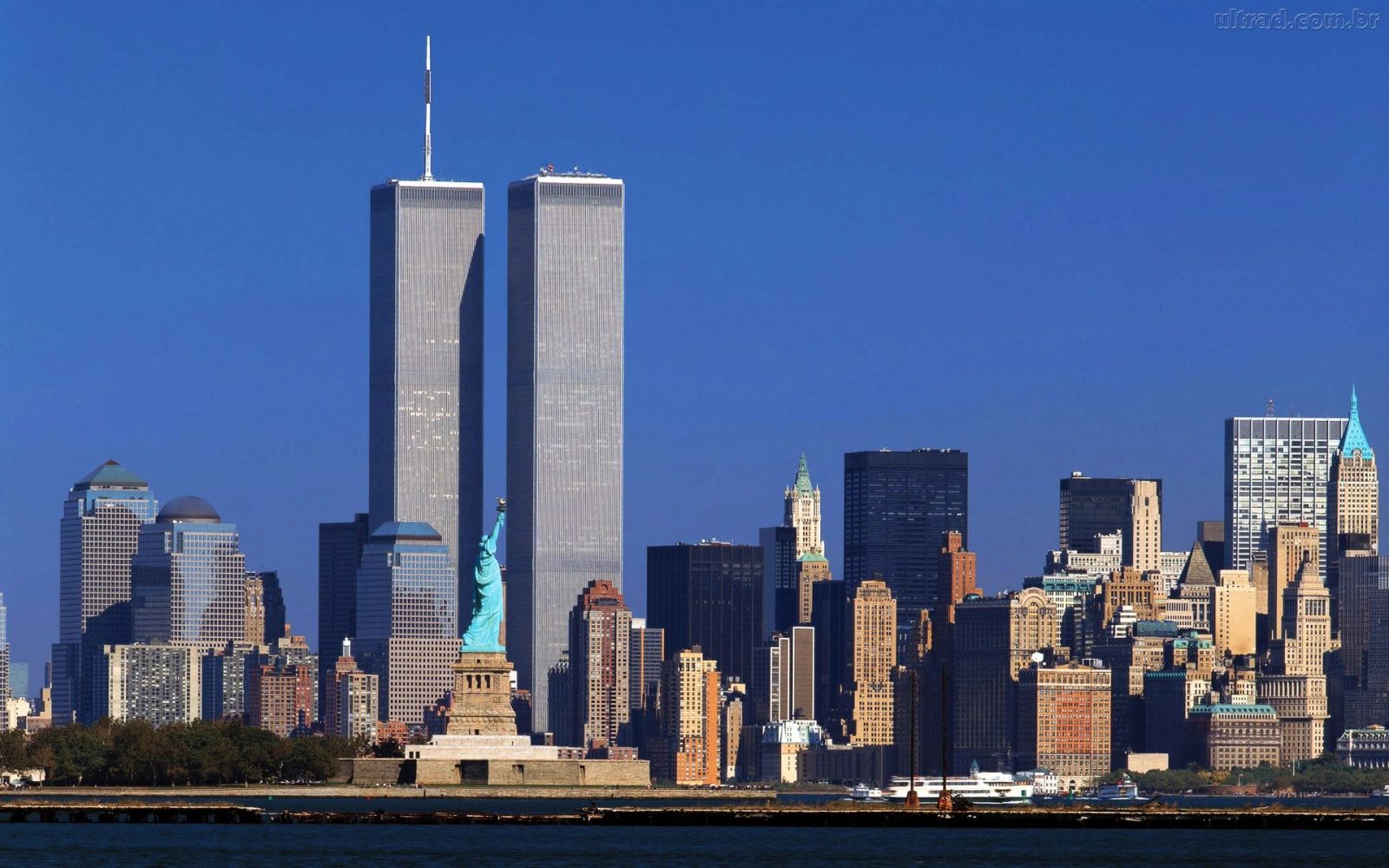
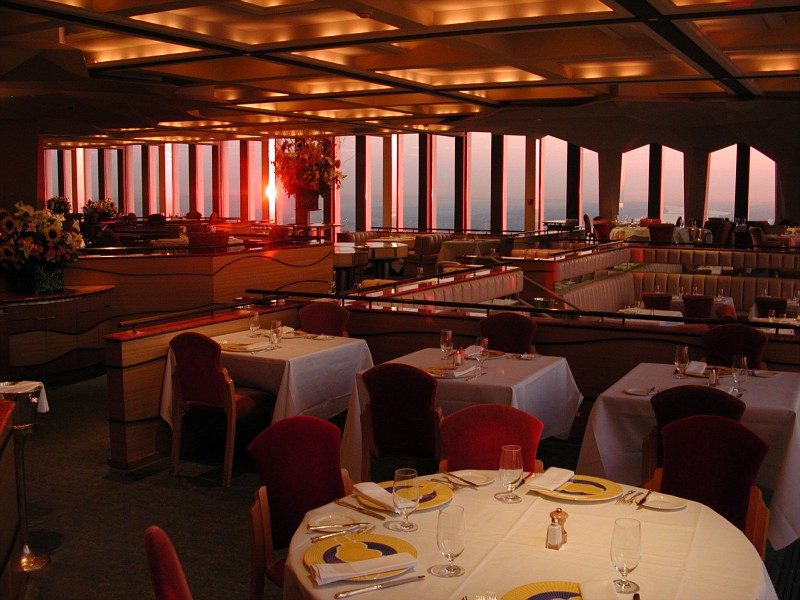
The Twin Towers became defining features of the New York skyline.
The complex provided nearly 10 million square feet of office space and housed more than 430 companies. Around 35,000 people worked there, while approximately 70,000 tourists and commuters passed through the site each day.
Its observation deck, restaurants, and public plaza made it more than an office district. It also became a major visitor destination and symbol of international commerce.
2001
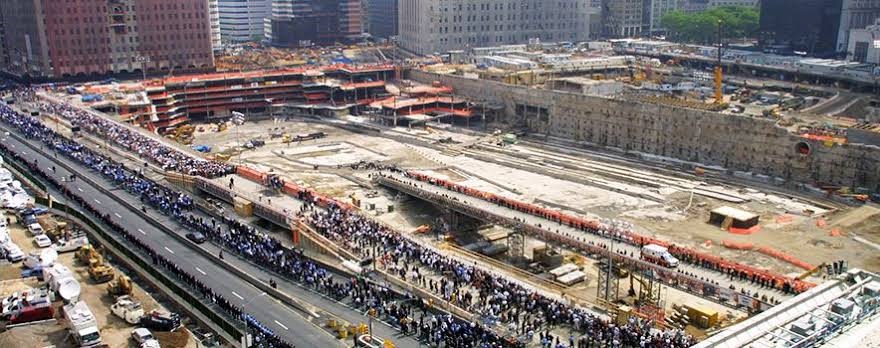
On September 11, 2001, the Twin Towers and several surrounding buildings were destroyed in the attacks.
The rebuilding process that followed had to balance two very different goals: restoring a major business district and preserving the site as a place of memory.
2002-2006
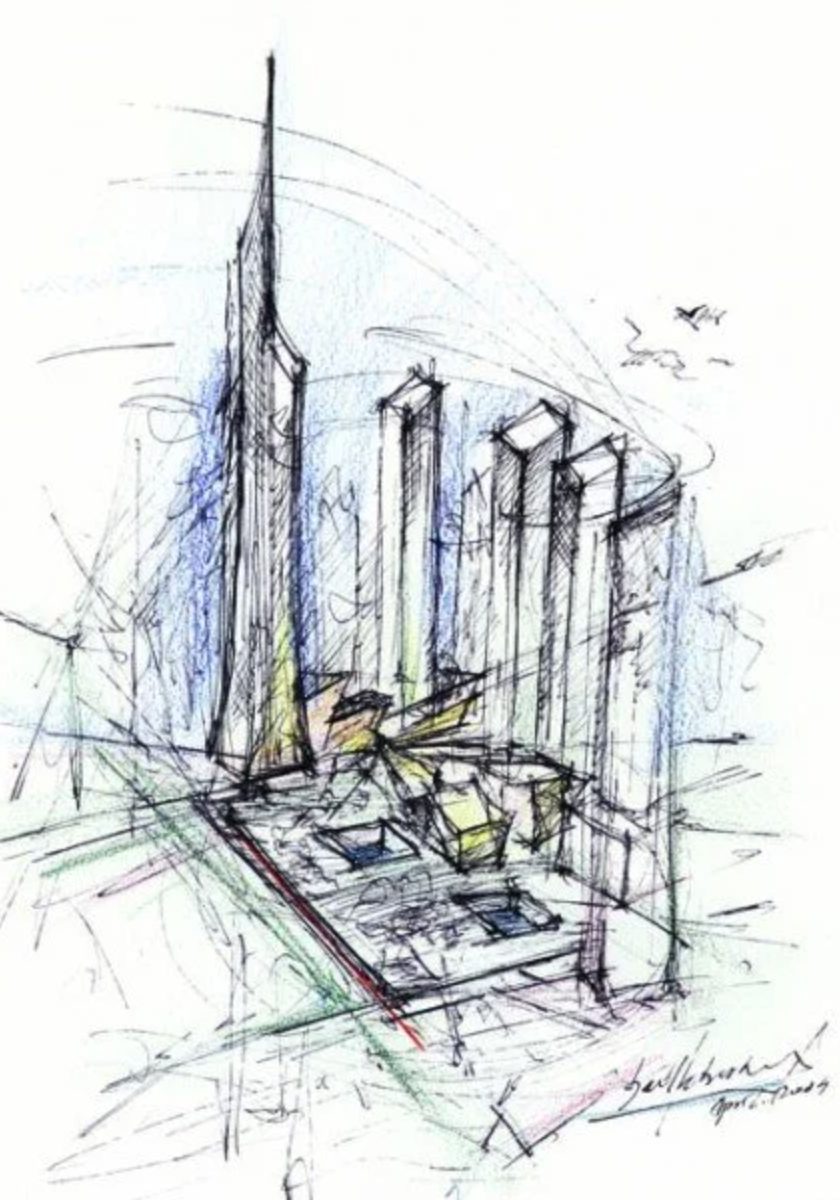
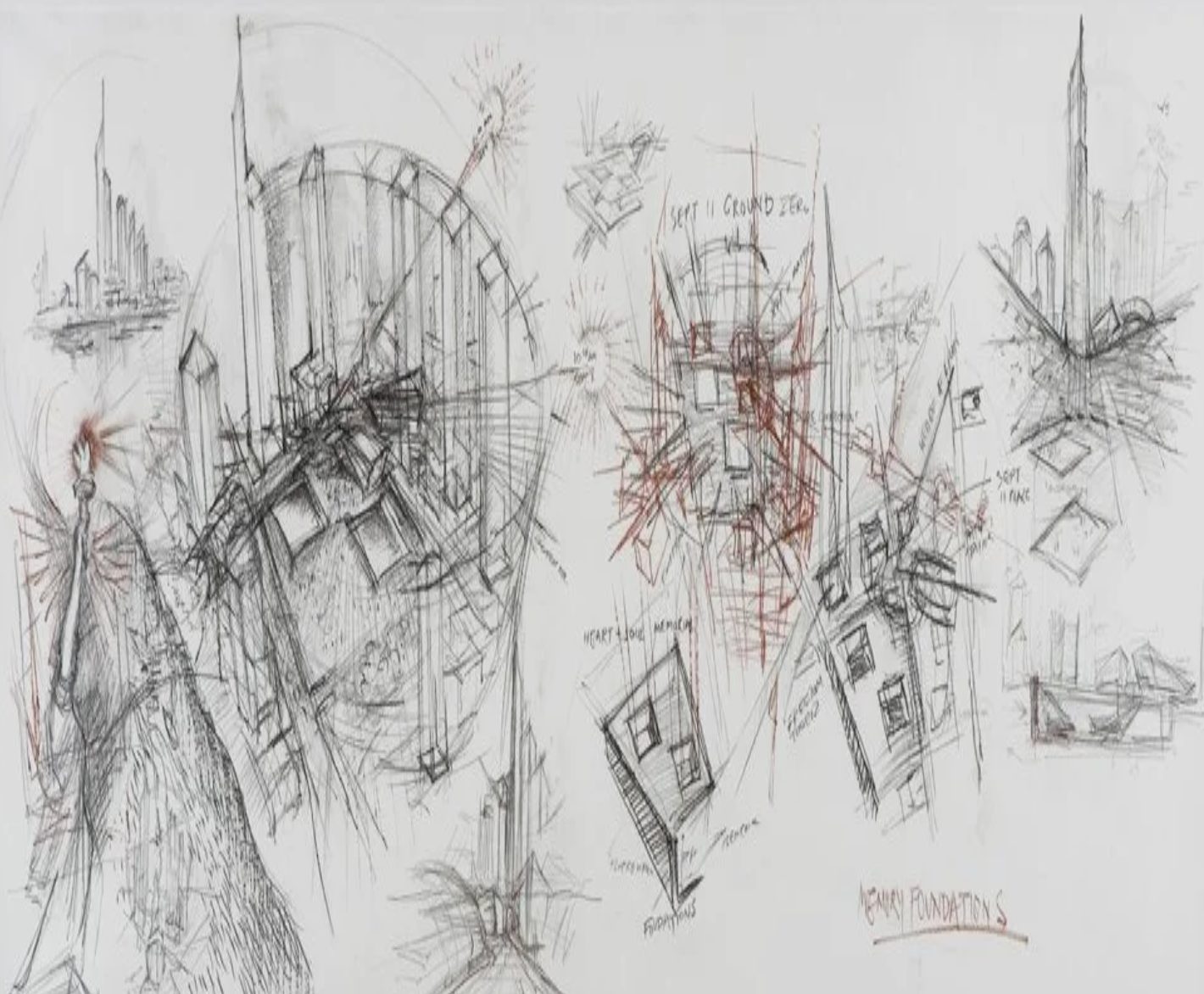
A planning and design process for the new World Trade Center began after the site was cleared. Eventually, Daniel Libeskind's master plan was selected in 2003. It combined new office towers with a memorial, museum, transportation hub, and public spaces.
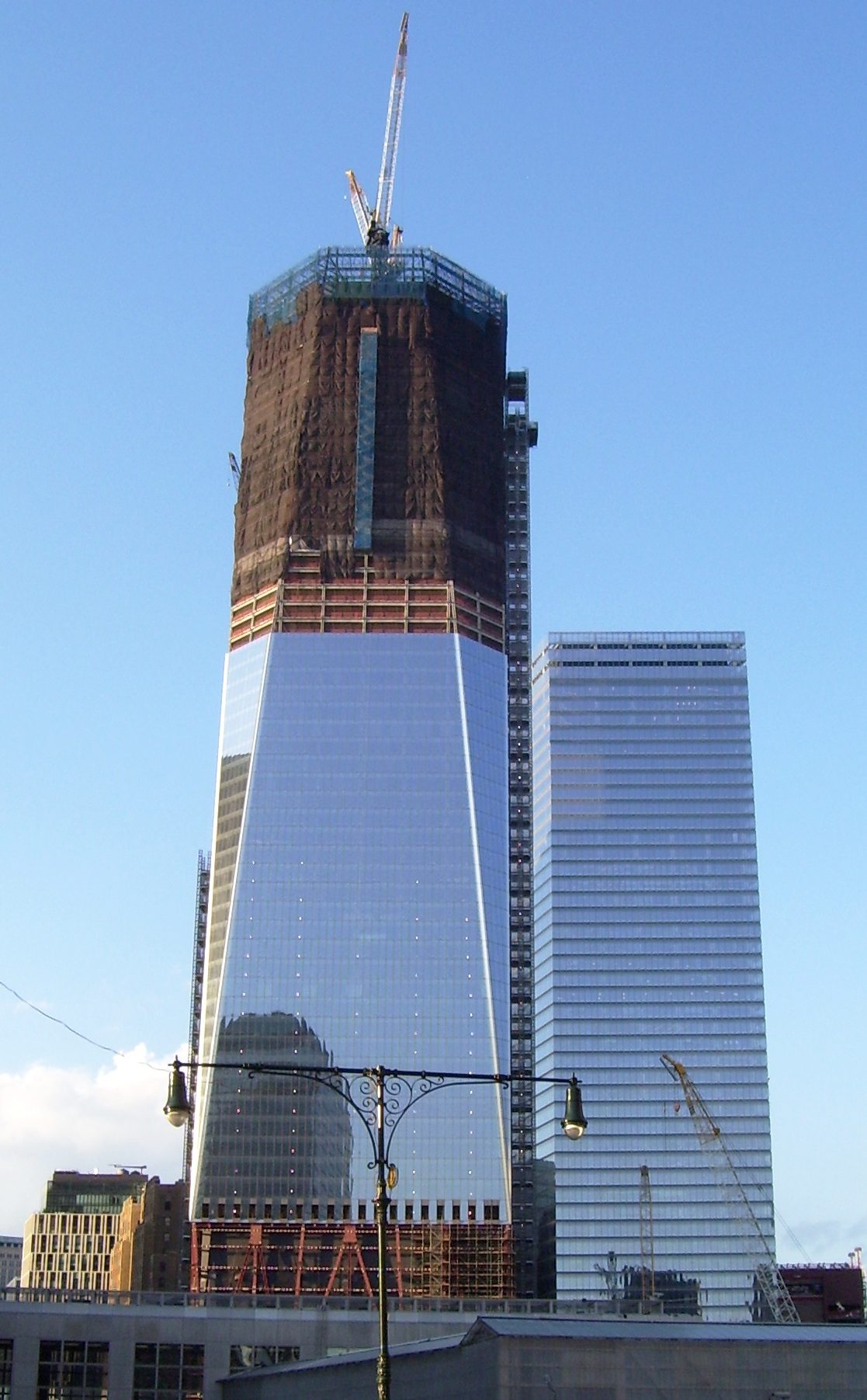
The construction of the One World Trade Center began in 2006.
2011-2016
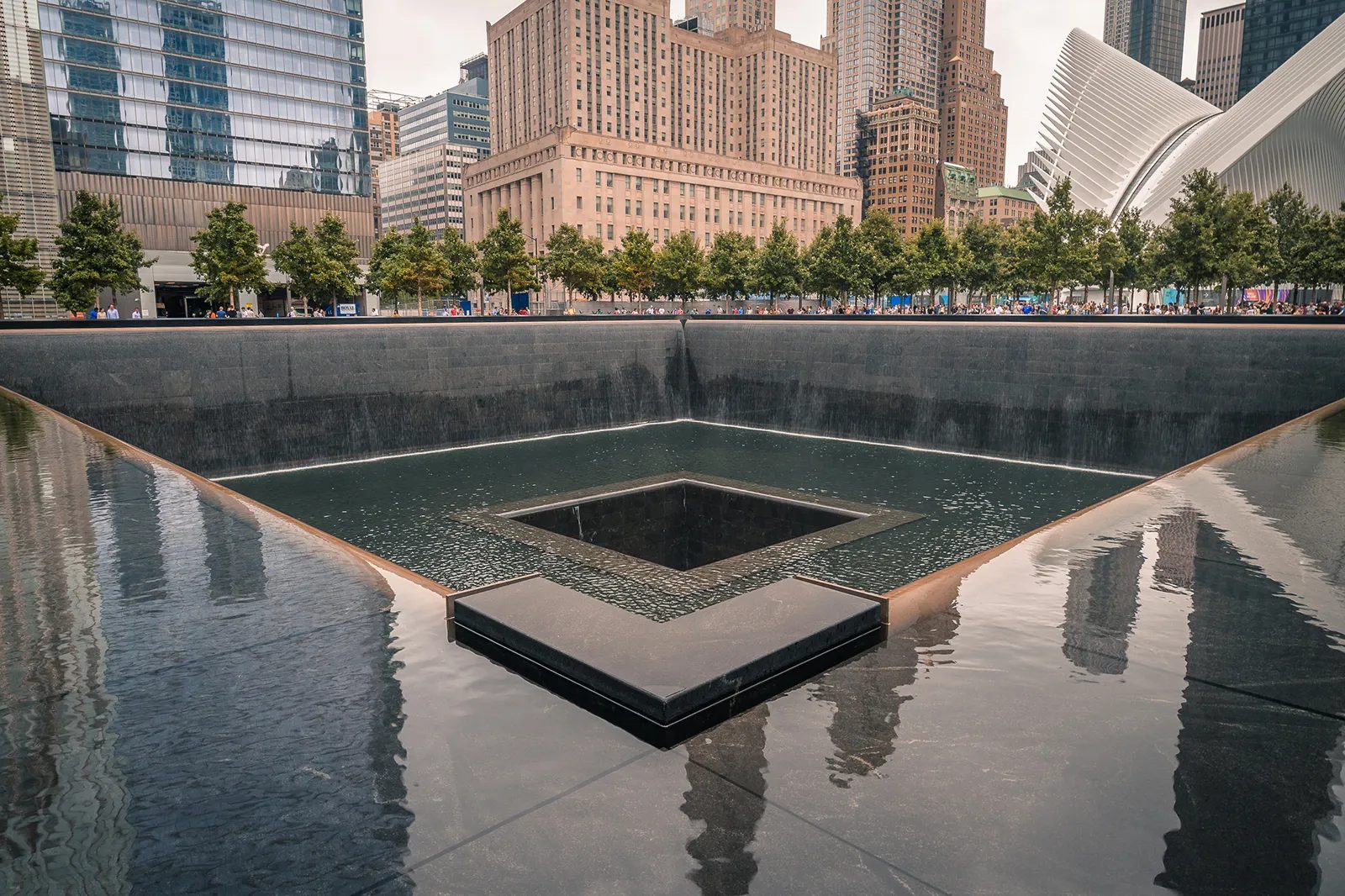
The 9/11 Memorial opened on September 11th, 2011, with two reflecting pools positioned in the footprints of the original Twin Towers.
Four World Trade Center opened in 2013, while One World Trade Center was completed and opened in 2014. The 9/11 Memorial Museum also opened in 2014, followed by the One World Observatory in 2015 and the Oculus transportation hub in 2016.
2016-Present
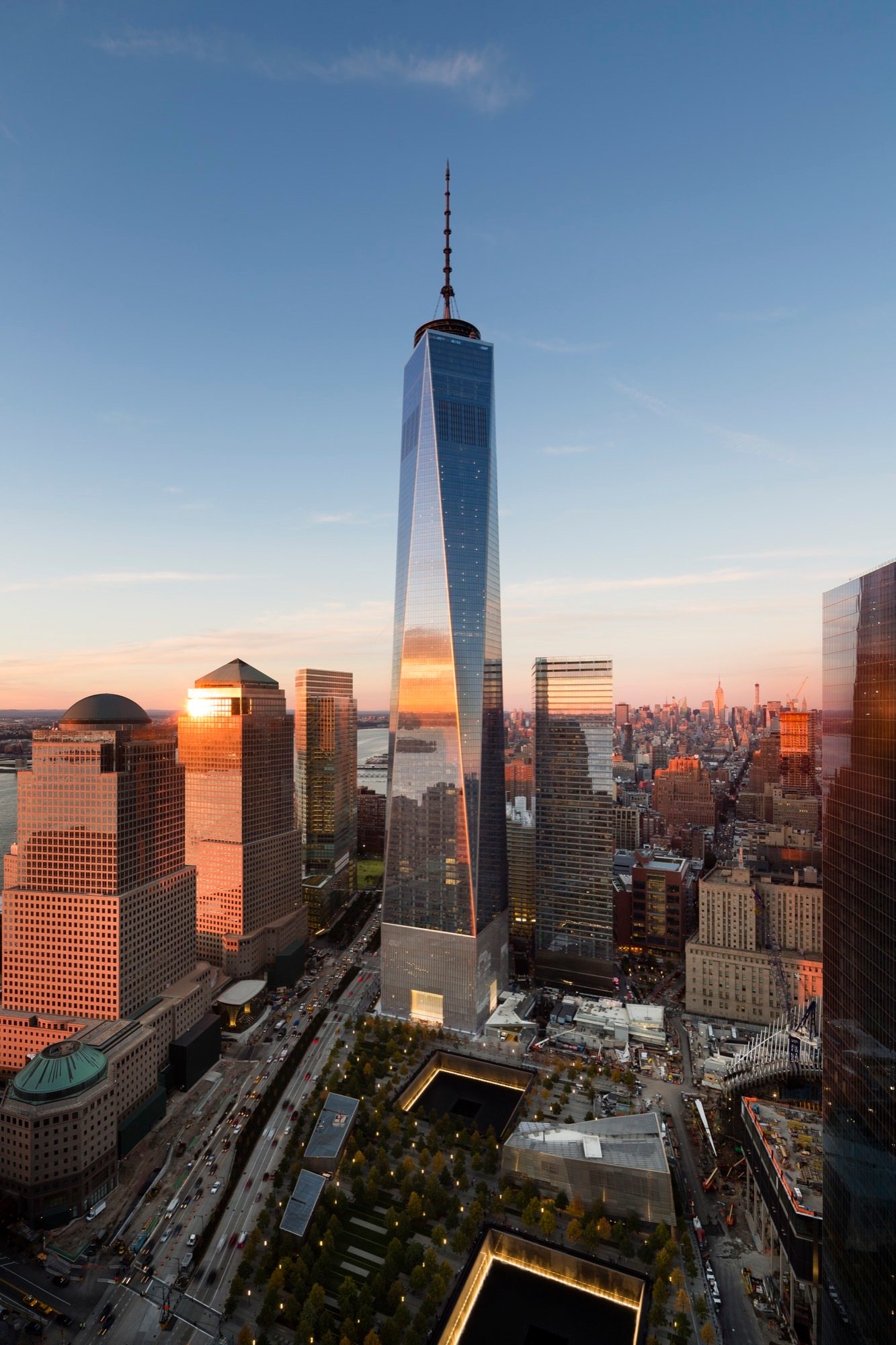
The rebuilt World Trade Center is now a 16-acre campus containing offices, transportation facilities, retail, public spaces, and cultural attractions.
The campus serves office workers, commuters, local residents, and international visitors throughout the day.